

Retrofitting your property is when you make energy efficient improvements to your home and garden to keep you warmer and lower bills.
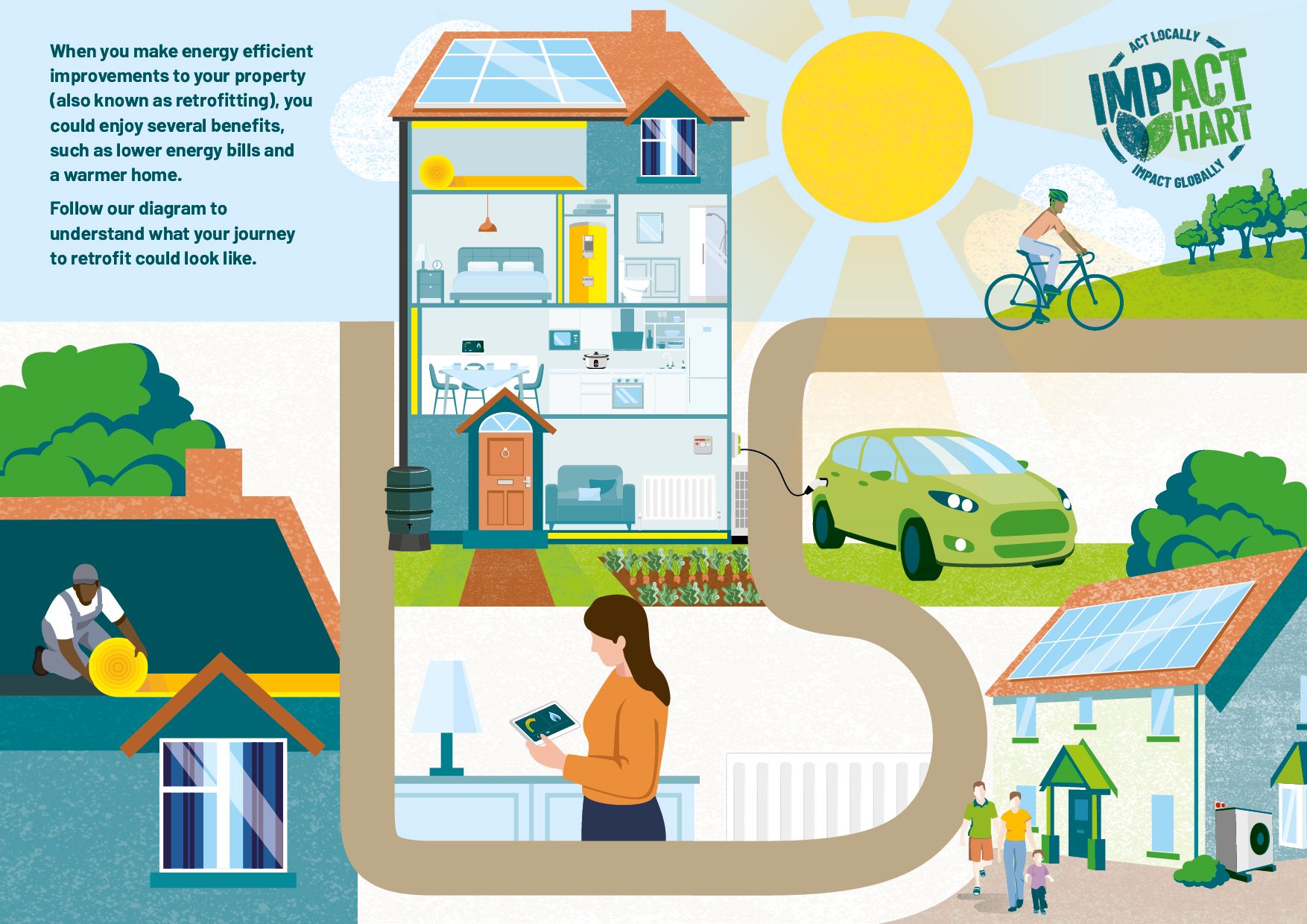
Follow our diagram to see what your journey to retrofit could look like. Just click on a number to bring up advice and useful links.
Improving the seals around your windows and doors, adding a draught excluder to your letterbox and using curtains across windows and doors is a very effective way of reducing draughts in your home.
Switching to LED lighting and smart heating or lighting controls will help you use energy more efficiently.
Consider installing or improving your existing home insulation, which can help you feel more comfortable across the seasons and cost less to feel warm in the winter. It can also mean that you can reduce the amount of gas or electricity that you use to heat your home in the first place, helping you to lower your energy bills. There may be grants available for this.
Reduce reliance on fossil fuel systems (such as oil, coal and gas) for heating and hot water. Heat pumps and other systems that use electricity could be powered using renewable energy sources.
Across the district, Hart District Council has installed electric vehicle charge points in some of the public car parks, so you can charge up when you are out and about. Some vehicles may be able to operate on Hydrotreated Vegetable Oil (HVO) where available, but please do check that your vehicle is compatible with this.
Sometimes switching your tariff or provider can save you money. You can also consider generating your own renewable energy by installing solar panels for example. Some people may be eligible for grant funding for solar panels and heat pumps.
Identify how energy efficient your home is. You can do this by:
- Checking your Energy Performance Certificate (EPC) if you have one
- Book one of the Council’s free thermal imaging surveys - they will identify heat loss in your home: read more about the thermal imaging scheme
Advice and support
For free and impartial advice on staying warm in your home, contact Hampshire’s independent home energy advice service, called the Environment Centre, on 0800 804 8601.
Accessible text for the journey to retrofit diagram
Draught proofing
Improving the seals around your windows and doors, adding a draught excluder to your letterbox and using curtains across windows and doors is a very effective way of reducing draughts in your home.
Read more about how to keep your home warm and draught proof.
Use energy efficiently
Switching to LED lighting and smart heating or lighting controls will help you use energy more efficiently.
Read about the LED lighting that Hart District Council has installed in all its car parks.
Improve your insulation
Consider installing or improving your existing home insulation, which can help you feel more comfortable across the seasons and cost less to feel warm in the winter. It can also mean that you can reduce the amount of gas or electricity that you use to heat your home in the first place, helping you to lower your energy bills. There may be grants available for this.
Heating your home
Reduce reliance on fossil fuel systems (such as oil, coal and gas) for heating and hot water. Heat pumps and other systems that use electricity could be powered using renewable energy sources.
Read more about heat pumps and how they work.
Switch to a renewable energy tariff
Sometimes switching your tariff or provider can save you money. You can also consider generating your own renewable energy by installing solar panels for example. Some people may be eligible for grant funding for solar panels and heat pumps.